
What Is the Fifth-Year Option in the NFL? Here’s How It Works

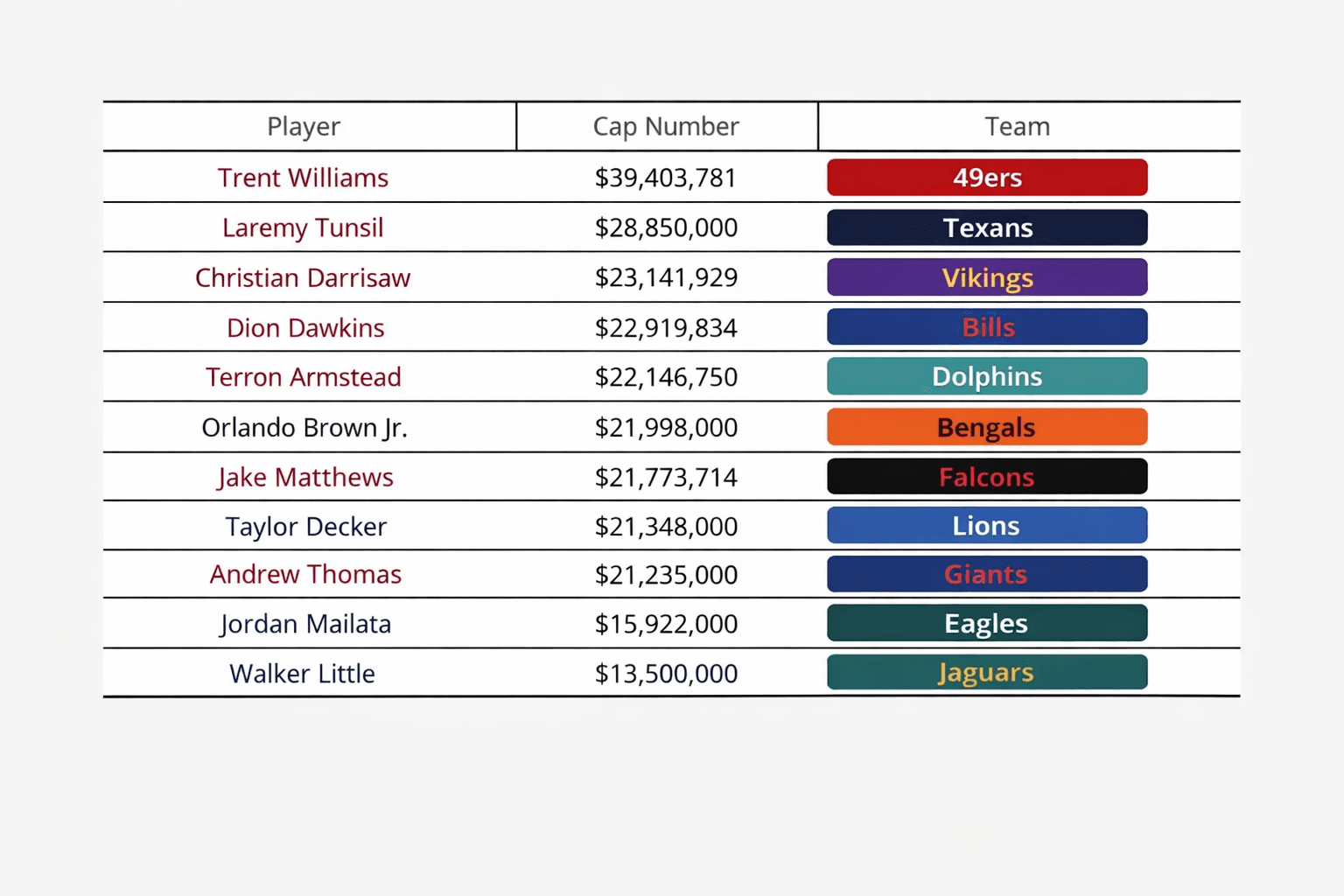
The fifth-year option gives NFL teams extra control over first-round picks, but the price depends on playing time and Pro Bowl honors. Here’s when it gets exercised, how it’s calculated, and why it matters.
The fifth-year option is one of the NFL’s most important roster tools, and it applies only to first-round draft picks. Every drafted player signs a four-year rookie contract, but teams have the right to add a fifth season for players taken in Round 1.
That matters because it gives franchises more control over a young player before he can hit free agency. It also gives teams extra time to evaluate whether a former first-round pick is worth a long-term extension.
Who gets a fifth-year option?
Only first-round picks are eligible for a fifth-year option. Players drafted in Rounds 2 through 7 do not have one built into their rookie deals, and neither do undrafted free agents.
When do teams have to decide?
A team must exercise the option after the player’s third regular season and before May 1 of the following league year. In simple terms, teams make the call after Year 3, before the player enters Year 4.
Exercising the option does not stop the player and team from negotiating a longer extension. If both sides want a new deal, they can still agree to one before or after the option is picked up.
Is the fifth-year option guaranteed?
Yes. Once a team exercises the fifth-year option, that salary becomes fully guaranteed. Under the current CBA, the player’s fourth-year base salary also becomes guaranteed if it was not already fully guaranteed for skill, cap, and injury.
How is the salary determined?
The old system was tied more directly to draft slot. Under the current CBA, performance matters more.
There are four basic pay tiers:
Players with two or more original-ballot Pro Bowls
These players get a fifth-year salary at the franchise-tag level for their position.
Players with one original-ballot Pro Bowl
These players get a fifth-year salary at the transition-tag level for their position.
Players who hit the play-time thresholds
If a player does not make a Pro Bowl on the original ballot but plays enough snaps, his option salary lands in the average of the 3rd- through 20th-highest salaries at his position.
Players who do not hit those thresholds
If the player does not make a Pro Bowl and does not meet the snap benchmarks, his option salary falls in the average of the 3rd- through 25th-highest salaries at his position.
The snap thresholds are based on a player reaching at least 75 percent of his team’s offensive or defensive snaps in two of his first three seasons, averaging 75 percent across all three seasons, or playing at least 50 percent in each of those three years.
Why does it matter?
For teams, the fifth-year option is a way to keep a talented first-round pick under control for one more season without immediately committing to a massive long-term contract.
For players, it can be a valuable guarantee, but it can also delay the chance to reach free agency. That is why the decision often becomes a major offseason storyline, especially for quarterbacks, pass rushers, tackles, and corners drafted in the first round.
In short, the fifth-year option is the NFL’s built-in extra year for first-round picks. Teams must decide on it after Year 3, the money is fully guaranteed once exercised, and the final salary depends on how much the player has produced early in his career.
#What it means
More from Features
View category →
Latest coverage
More from The Snap
- 01
- 02
- 03
- 04
- 05