
Hero RB Strategy: How It Works in Fantasy Football

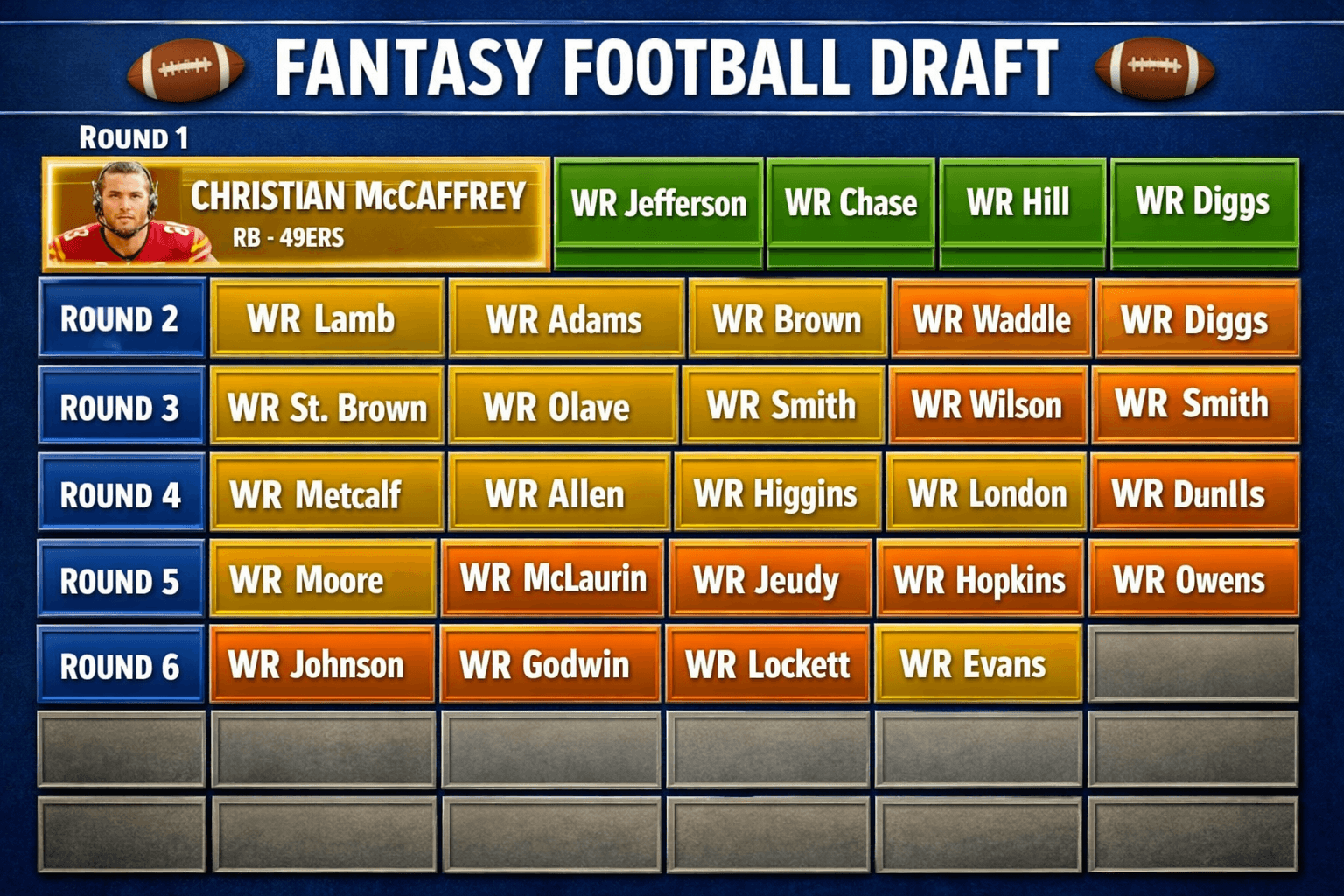
Hero RB is a fantasy football strategy that pairs one early anchor running back with premium picks at other positions. Use this round-by-round plan to build it correctly.
Hero RB is a fantasy football draft strategy built around taking one elite running back early, then attacking the rest of the board with flexibility.
Instead of using multiple premium picks on running backs, Hero RB asks you to lock in one true anchor and then shift your early-round focus to wide receivers, tight ends, or even quarterback, depending on format and value.
The idea is simple: secure one running back you trust, avoid overcommitting to a volatile position, and build the rest of your lineup around stronger weekly depth.
#What Hero RB means in fantasy football
Hero RB usually means drafting one high-end running back in the first one or two rounds, then waiting several rounds before taking another back.
A typical Hero RB build looks something like this:
- one elite RB early
- wide receivers as the main focus in the next few rounds
- optional early tight end or quarterback if the value is right
- upside running backs added later for depth, flex value, or breakout potential
It is often described as a middle ground between Zero RB and a more traditional RB-heavy start.
#How the Hero RB strategy works
The strategy is built around the idea that not all running back investments are equal.
Fantasy managers using Hero RB want one back who can give them reliable volume, touchdown upside, and pass-game usage. After that, they would rather spend premium picks on positions that may offer better depth, longer durability, or stronger value in the middle rounds.
That means the first running back is supposed to carry the room early, while the rest of the roster gets stronger around him.
In practice, Hero RB often gives you:
- one clear RB1
- a stronger WR room than a two-RB start usually creates
- more flexibility at flex
- less dependence on guessing correctly on multiple early running backs
#A round-by-round Hero RB draft plan
Hero RB is a structure, not a rigid list of positions. The exact picks should follow your league settings and the value on the board, but this is a practical 12-team redraft framework.
| Draft stage | Primary goal | Running back decision | Why it fits Hero RB |
|---|---|---|---|
| Rounds 1-2 | Secure an anchor RB only at fair value | Take one back with a three-down or high-value-touch ceiling | The first RB supplies the weekly floor for the build |
| Round 3 | Build strength at WR, TE or QB | Do not force RB2; take a second back only if a clear value falls | This is where Hero RB starts creating a positional edge |
| Rounds 4-6 | Fill core starters and attack strong tiers | Monitor RB value without reaching to complete the depth chart | A flexible roster is more valuable than following a preset round |
| Rounds 7-10 | Add multiple upside backs | Target receiving roles, ambiguous depth charts and direct paths to touches | Several calculated bets are better than one low-ceiling RB2 |
| Round 11 and later | Build contingent value and bench flexibility | Add high-upside backups rather than touchdown-only veterans | Late picks should be easy to replace if their role never develops |
#What should you draft in Round 3?
After opening with an anchor running back, Round 3 is usually a place to take the best wide receiver, tight end or quarterback value available. Drafting RB2 is still allowed, but it should be because the player fell past your valuation, not because the roster screen has an empty second running back slot.
If the elite running backs are gone before your first pick, abandon the structure. Starting WR-WR and moving toward Zero RB or a balanced build is better than forcing a player into the hero role.
#Why fantasy players use Hero RB
The biggest appeal of Hero RB is balance.
Running back is still one of the most important positions in fantasy football, especially because true three-down workloads are rare. But it is also one of the most fragile positions. Hero RB tries to capture elite upside without forcing managers to spend multiple early picks on the same volatile spot.
Fantasy players also like the strategy because it lets them:
- anchor the roster with one premium back
- build strong receiver depth early
- avoid forcing a second RB pick in a weak tier
- take more calculated swings on later backs with upside
When the board cooperates, Hero RB can give a roster both weekly stability and room for growth.
#How to choose the right anchor running back
The strategy works only if the first back has a realistic path to difference-making volume. Look for role quality, not just name value or last season's fantasy finish.
- A secure weekly touch floor, including a clear early-down role
- Passing-game usage that keeps the player involved when game script changes
- Goal-line work or an offense capable of creating regular scoring chances
- Limited competition for the most valuable touches
- A draft cost that still leaves access to premium receivers in the next rounds
A talented player in a three-way committee is usually a poor Hero RB foundation. The label requires both ability and a workload capable of carrying the position while you wait.
#Where Hero RB works best
Hero RB tends to work best in formats where wide receiver depth matters and lineup flexibility is valuable.
It is often a good fit for:
- full PPR leagues
- leagues with three starting receivers
- flex-heavy formats
- deeper drafts where later RB darts still matter
- fantasy managers who are comfortable playing the waiver wire
It can also work well in drafts where the running back pool feels strong at the top, but less trustworthy in the middle rounds.
Next: Read The Snap's complete fantasy draft strategy guide, then test different Hero RB starts in the mock draft simulator.
#Risks of the Hero RB strategy
Hero RB is not automatic.
The biggest risk is obvious: if your early running back misses time or underperforms, the entire structure can feel shaky. A strategy built around one anchor works only if that anchor actually holds.
There is also a second risk. If you wait too long to add your RB2 and RB3, you can end up chasing committee backs, touchdown-dependent options, or fragile handcuffs without enough weekly certainty.
That is why Hero RB still requires discipline. You are not ignoring running back. You are simply changing when and how you invest in it.
#Hero RB vs. Zero RB
Hero RB and Zero RB are related, but they are not the same thing.
Zero RB is more aggressive. It pushes the running back position down the board and often asks managers to wait much longer before drafting their first back.
Hero RB is more conservative. It still believes in the value of securing one elite option early. The difference is that it stops there and uses the rest of the premium draft capital elsewhere.
That distinction matters. Hero RB is often easier for most fantasy players to execute because it gives the roster a clearer early foundation.
| Strategy | Early-round approach | Main strength | Main risk | Best fit |
|---|---|---|---|---|
| Hero RB | Draft one elite RB early, then shift to WR, TE or QB | One anchor back without multiple premium RB picks | An injury to the anchor can expose thin depth | Managers who want balance and flexibility |
| Zero RB | Wait on RB until the middle rounds | Maximizes early value at receiver and other positions | Needs late-round or waiver-wire RB hits | Full-PPR leagues with deep benches |
| Robust RB | Take two or more RBs early | Immediate RB depth and injury insulation | Can leave wide receiver depth thin | Formats that heavily reward rushing volume |
| Balanced | Mix RB and WR without forcing a structure | Easy to adjust as the board changes | May miss the strongest position-specific edge | Managers comfortable drafting the best available value |
#When to avoid Hero RB
Hero RB is not the best answer in every room.
You may want to pivot away from it if:
- the elite running backs are gone before your pick
- the draft room lets wide receiver value fall too far
- your league scoring heavily rewards rushing volume
- the board keeps handing you discounted RB value early
- you do not trust yourself to build RB depth later
The best draft strategy is rarely the one you force no matter what. Hero RB works when the board supports it.
#Bottom line
Hero RB is a draft strategy built around securing one elite running back early, then spending the next stretch of the draft building strength everywhere else.
It gives you one anchor at the position without forcing a second premium investment into a volatile spot. When used in the right format and with the right board, it can create one of the most balanced roster builds in fantasy football.
#FAQ
#Which round should you draft your Hero RB?
Most Hero RB builds select the anchor in Round 1 or Round 2. The correct cutoff depends on league size, scoring and the players available; the strategy should be abandoned if no back with a true anchor profile is worth the price.
#Should you take a running back in Round 3 with Hero RB?
Usually not by design. Round 3 is commonly used on a wide receiver or another premium-position value. Take RB2 there only when the value is clearly better than the alternatives.
#What is the difference between Hero RB and Zero RB?
Hero RB starts with one elite running back early, while Zero RB waits much longer before taking the first running back. Hero RB is more of a middle-ground roster build.
#Is Hero RB better in PPR leagues?
It often is, because PPR formats reward wide receiver depth and pass-catching volume. That makes the non-RB part of the build more appealing.
#Do you need to draft a second running back right away after going Hero RB?
No. The point of the strategy is usually to wait on the position after drafting your first anchor back. You still need to build depth later, but not immediately.
#Is Hero RB safe?
It is safer than Zero RB in some ways because you still get one premium back. But it still depends heavily on that player staying healthy and productive.
#Can Hero RB work in best ball and redraft?
Yes. The structure can work in both, although the exact way you build depth behind the anchor back may change based on format.
#Key Terms
#Hero RB
A draft strategy where you take one elite running back early, then prioritize other positions before returning to RB later.
#Zero RB
A strategy that delays running back selections much longer and focuses early capital on wide receivers and other positions.
#Anchor Back
The one premium running back your Hero RB build is designed around.
#Roster Construction
The overall shape of your fantasy team based on how you allocate draft picks across positions.
More from Fantasy
View category →

Latest coverage
More from The Snap
- 01
- 02
- 03
- 04
- 05